
Luxury residential architecture begins with a simple idea and then becomes a complete, buildable reality through a disciplined architectural design process. When people search for archi design, they are often looking for more than inspiration. They want clarity on scope, confidence in decision making, and an architect who can translate lifestyle into a refined, custom home that feels effortless to live in.
This guide explains what architectural design services include, how modern architecture and sustainability fit naturally into luxury projects, and how to evaluate an architect for a high stakes build or remodel. It also touches on commercial work where it supports the same core principles of flow, craft, and experience.
What “Archi Design” Means for Luxury Homes Today
In practice, archi design is the full craft of shaping a home from concept to construction. It sits at the intersection of design, architecture, and real world building constraints. For a luxury house, it also includes a deep understanding of how daily life actually unfolds. Morning light in the kitchen. Quiet separation between public and private rooms. A porch that frames arrival. Window placement that captures view lines without sacrificing privacy. A roof form that feels intentional from every angle.
The best design archi outcomes feel personal and inevitable at the same time. The home looks like it belongs on its site. The floor plan feels intuitive. The details support the interiors rather than competing with them.
This article will help you understand what you receive when you hire an architect, what to expect at each stage, and how to choose a long term design partner for an archi design home that will hold its value and beauty for years.
Architectural Design Services Explained: What You Actually Receive
Luxury projects move smoothly when everyone shares a clear definition of deliverables. Architectural design services typically include the following phases, with scope tailored to the project.
Concept and vision
This stage clarifies what the home should feel like, not just what it should contain. Your architect will gather goals, aesthetic preferences, and practical needs. This is where art and composition matter. Proportion, massing, and an overall architectural language begin to emerge.
Common outputs include:
- Early concept sketches and precedent references
- A design direction that aligns architecture and interior intent
- Initial constraints review based on site and local requirements
Programming and space planning
A luxury home succeeds when its program matches how you live. Programming defines the spaces that matter and how they relate. This includes public areas, private suites, guest zones, work areas, wellness spaces, and support functions.
Your architect may map:
- Room priorities and sizes
- Adjacencies and circulation
- Quiet and active zones
- Indoor outdoor living sequences
This phase is where “more rooms” becomes “better rooms.” A smaller number of well planned spaces often delivers a more luxurious experience than a larger home with wasted square footage.
Floor plans and early massing studies
This is where architect design floor plans begin to take shape. Early plans explore layout logic, axis lines, entry sequence, stair placement, and how each room connects to light and exterior views.
Expect iterations. The goal is to refine the plan until it feels natural for your lifestyle, then confirm it aligns with structural logic and site realities.
Exterior architecture and façade development
A luxury façade feels composed, not assembled. Façade development includes:
- Overall form and volume composition
- Window proportion and rhythm
- Roof geometry and roof pitch
- Material palette and texture strategy
- Entry design, including porch and threshold moments
Even elements as simple as an arch at an entry or a curved opening in a transition hall can become a signature gesture when it is placed with restraint and purpose.
One useful reminder: plan and elevation must evolve together. A beautiful elevation that ignores the floor plan rarely builds well. A practical plan without a façade strategy often looks flat.
Documentation for permitting and construction
High quality documentation reduces change orders and protects design intent. Many clients underestimate how much value lives in the details of a thorough plan set.
Plan sets commonly include sheets such as floor plans, exterior elevations, and other drawings that document roof pitches, door and window locations, and building sections.
For luxury projects, the goal is clarity. Builders need accurate information to price correctly. Consultants need coordination to avoid conflicts. Owners need confidence that the design they approved is the design that will be built.
Luxury Archi Design Home Priorities: What Clients Should Expect

Luxury is not defined by cost alone. It is defined by precision, comfort, and an environment that supports the way you want to live.
A custom floor plan that matches real routines
A custom floor plan should reflect your day, not a generic template. Consider:
- How you arrive home and where you set things down
- How guests move through public rooms
- How private spaces stay quiet even during entertaining
- How services and support spaces stay out of view
The goal is a house that feels calm and easy, even during busy moments.
A strong relationship between architecture and interior design
Great architecture supports interior design through proportion, daylight, and thoughtful transitions. Ceiling heights align with room function. Window heads and sills create consistent visual lines. Circulation spaces feel intentional rather than leftover.
Interior design becomes richer when the architecture has a clear framework. Interior does not need to work overtime when the rooms already feel balanced.
Light, privacy, and views in harmony
Window placement in luxury homes is both art and strategy. The right window can frame a view like a painting. It can also control glare, protect privacy, and shape the mood of a room.
A refined archi designer thinks about:
- Morning and evening light patterns
- Shading, overhangs, and rooflines
- Sight lines from neighboring properties
- Ventilation and comfort
Exterior elements that feel purposeful
Luxury exteriors rely on restraint. A porch becomes memorable when it frames entry with scale and depth. Roof geometry feels elegant when it is resolved from all sides. The façade reads as a composition, not a collage.
Modern Architecture Meets Timeless Craft
Luxury clients often ask for modern architecture because it feels clean and intentional. The most successful modern homes still carry timeless principles.
What modern architecture looks like in luxury residential
Modern architecture often emphasizes:
- Clear massing and strong geometry
- Fewer, more meaningful materials
- Large openings balanced by solid wall planes
- Seamless transitions to outdoor living
When done well, modern is not a trend. It is a disciplined approach to proportion and detail.
Classic styles as reference points, not templates
Some clients love historical cues, while still wanting a contemporary lifestyle. Styles can provide useful reference points:
- Victorian architecture can inspire vertical proportion and detailed trim strategy
- Italianate architecture can inform window rhythm, cornice lines, and façade balance
- Cape Cod references can guide cozy scale, roof form, and restrained detailing
- Farmhouse cues can inform simple volumes and warm material palettes
- Gothic architecture can inspire arch forms and dramatic interior volume
A skilled architect translates these ideas into a custom design that feels cohesive and current, rather than literal or themed.
Sustainable Architectural Design for Luxury Homes
Sustainability and luxury align naturally when the goal is comfort and long term performance. Sustainable design choices often improve daily life, lower operational costs, and add resilience.
Orientation, shading, and passive comfort
Many sustainability wins happen before a single finish is selected. Early planning can align the house with sun, wind, and views. Window placement and roof overhangs can reduce heat gain while keeping rooms bright.
Materials that age well
Luxury projects benefit from materials that look better over time. A thoughtful palette also simplifies maintenance and supports resale value. The best choices balance aesthetics, durability, and lifecycle considerations.
Efficient systems that support comfort
High performance HVAC, smart controls, and well planned insulation strategies support comfort quietly in the background. Luxury feels effortless when systems work without noise, drafts, or hot spots.
The Archi Design Process: From First Conversation to Final Build
A clear process is one of the strongest indicators of quality. It protects your time, your budget, and your decision making.
Discovery and site intelligence
Discovery includes lifestyle goals, project constraints, and site realities. This can include survey review, zoning awareness, and early feasibility thinking. A strong architect uses constraints as creative boundaries rather than obstacles.
Schematic design and iteration
Schematic design explores options. You should expect alternatives that test different massing ideas and floor plan strategies. Iteration is where the home becomes truly custom.
Design development and coordination
Design development moves the project from idea to buildable reality. Coordination with structural engineering, mechanical planning, and other consultants happens here. Interior design coordination also becomes critical, especially around ceiling conditions, lighting plans, and built in elements.
Construction documents and builder alignment
Construction documents are where precision matters most. Clear drawings support accurate pricing and reduce surprises. Many luxury projects succeed or fail based on documentation quality and coordination discipline.
Construction phase support
During construction, the architect helps protect design intent through reviews, responses to questions, and clarification when conditions change.
House Plans, Floor Plans, and Custom Architecture: What to Choose and Why
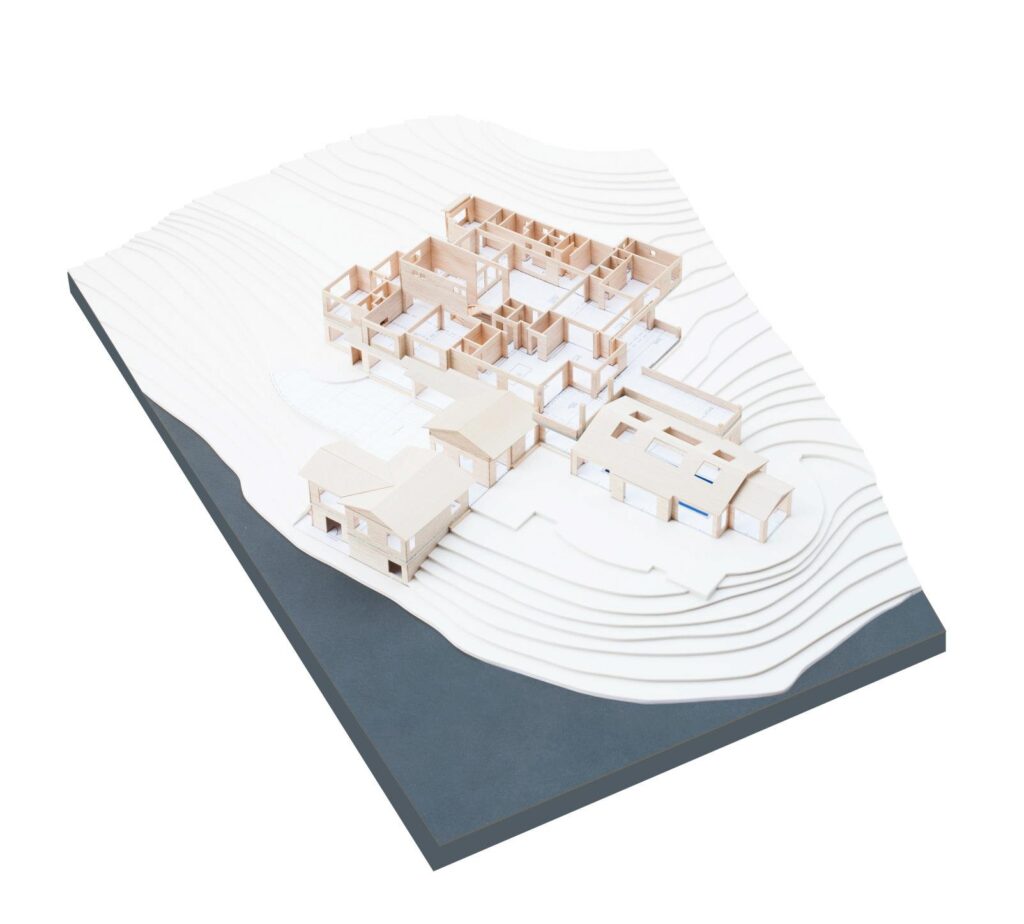
Many high intent searches lead to plan libraries and pre drawn sets. These can be useful in certain scenarios. Luxury projects often require a different approach.
When architectural house plans can make sense
Plan sets can help you:
- Explore layout ideas quickly
- Estimate general square footage needs
- See style variations and common planning strategies
Some plan providers offer custom plan services and modifications to bring sketches and notes into a one of a kind design.
Plan sets often include sheets like floor plans and exterior elevations, which can help you understand general documentation structure.
Why custom architecture house design is different
Luxury sites and luxury expectations create unique requirements:
- Views and privacy conditions vary by lot
- Setbacks, slopes, and access points shape the form
- Material detailing and façade refinement require coordination
- Interior design integration needs intentional structure
Custom architecture is less about choosing an “architectural designs house plans” template and more about designing a complete system that fits your land, lifestyle, and long term goals.
A practical hybrid approach
Some clients begin with a plan concept, then work with residential home architects to rebuild it properly for their site and lifestyle. This can be a smart starting point when the plan is treated as inspiration rather than a final answer.
Commercial Projects and the Luxury Mindset
This guide focuses on luxury homes, yet commercial work often reinforces the same skills. Commercial architecture demands clear circulation, strong first impressions, and repeatable details that perform under real use.
Hospitality as a lesson in experience
A well designed hospitality space teaches valuable lessons about sequence, lighting, acoustics, and human flow. That is why some clients search terms like archi design restaurant while evaluating design sensibilities. The same attention to experience can elevate a luxury home’s entry, entertaining spaces, and indoor outdoor transitions.
How to Choose the Right Architect for a Luxury Project
Selecting an architect is one of the most consequential decisions you will make. Luxury projects reward teams that are both creative and disciplined.
What to look for in a portfolio
A strong portfolio shows:
- Consistency of composition and proportion
- Variety across sites and client needs
- Thoughtful façade development
- Interior volumes that feel intentional, not accidental
- Craft, material control, and window strategy
If the work looks beautiful but every project feels identical, the firm may be style driven rather than client driven. Luxury clients typically want originality aligned to personal identity.
Questions to ask before you sign
Use questions that reveal process maturity:
- How do you define programming and validate it early?
- How many iterations are typical in schematic design?
- How do you coordinate interior design and consultants?
- What is included in your construction documentation?
- How do you support the project during construction?
Red flags that cost money later
A few patterns often lead to expensive problems:
- Unclear scope boundaries
- Weak documentation standards
- Poor coordination between architecture and engineering
- A process that depends on last minute decisions
Luxury homes demand clarity. A refined process is part of the product.
Where We Work

Our team designs new custom homes, sophisticated remodels, ADUs, and additions, serving communities including Fremont, Pleasanton, and Redwood City.
- Architectural design services in Fremont are ideal for owners who want a custom home that balances privacy, view lines, and modern living.
- Serving Pleasanton and nearby areas, our residential work focuses on refined planning, thoughtful façade composition, and buildable detailing that supports long term value.
- For clients planning homes near Mission Peak, site orientation and window strategy become especially important, since views and sun exposure shape the experience from room to room.
Featured Snippets and People Also Ask
What are architectural design services?
Architectural design services are professional services that guide a project from concept through documentation so it can be permitted, priced, and built. Services usually include programming, floor plans, exterior elevations, and construction documentation.
How long does architectural design take for a custom luxury home?
Timelines vary based on scope, approvals, and complexity. A luxury custom home often requires multiple design iterations, consultant coordination, and thorough documentation. Projects move faster when decisions are made early during programming and schematic design, then protected through disciplined documentation.
What is the difference between house plans and custom architectural design?
House plans are pre drawn templates that can sometimes be modified. Custom architectural design is created for a specific site and client, with coordinated structure, systems, and detailing. Some plan services provide custom options and modification support, yet luxury projects often benefit from a fully integrated approach.
How do modern and sustainable design work together?
Modern architecture often prioritizes clarity, daylight, and strong composition. Sustainable design adds performance goals like comfort, resilience, and efficient energy use. When coordinated early, window placement, roof overhangs, and material choices can support both aesthetics and performance.
How do I start with an architect?
Start with a discovery conversation that clarifies goals, site realities, and budget alignment. Bring inspiration images, a rough list of spaces, and any constraints you already know. A strong architect will guide programming, then translate priorities into a buildable floor plan and façade strategy.
Start Your Project With Confidence
Luxury residential architecture works best when it is treated as a partnership. The right architect brings creative vision, technical discipline, and a process that respects your time.
To see how refined architectural design translates into real homes, explore our Portfolio. When you are ready to discuss your goals, reach out to begin the conversation.